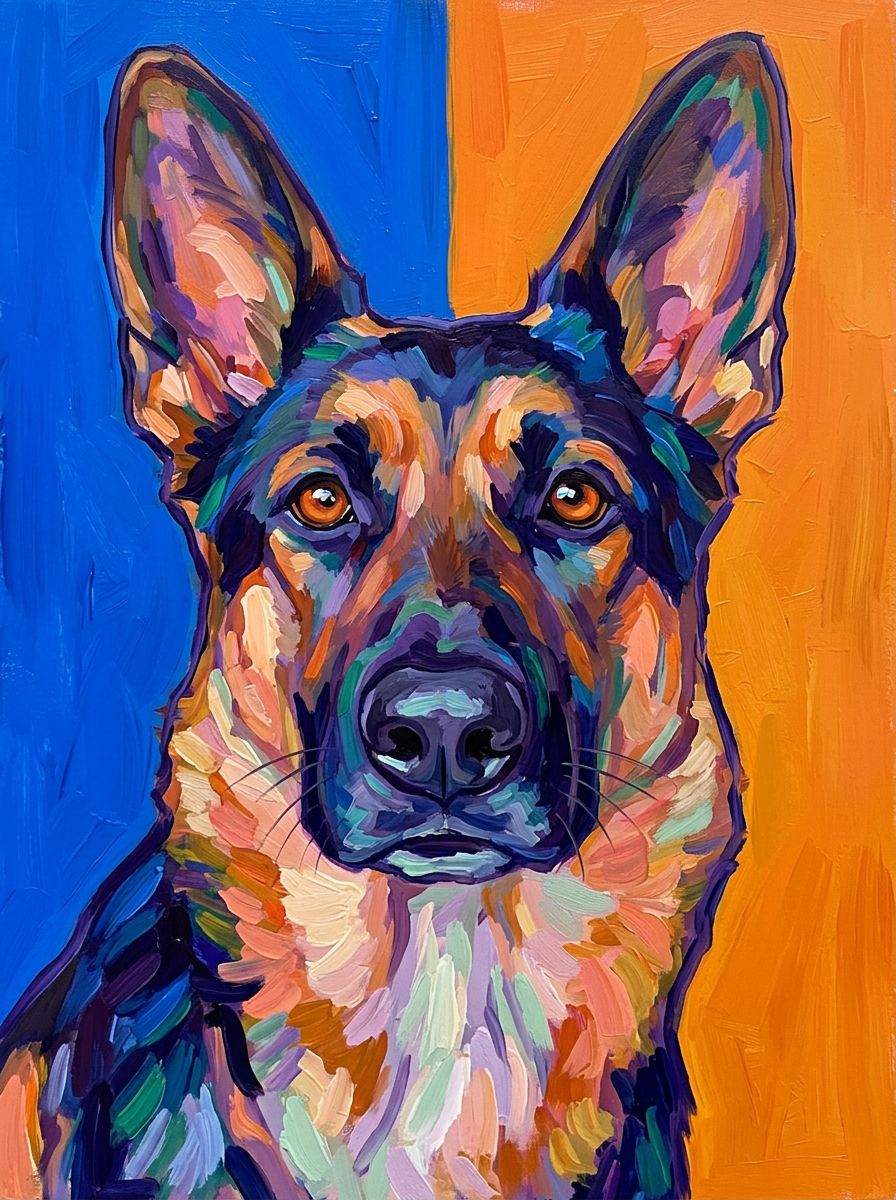
A German Shepherd portrait is all about that noble head: tall ears, an alert, intelligent look and the classic saddle markings. Whether your Shepherd is black and tan, sable, all black or white, the markings stay exactly where they are on your dog, so the painting is unmistakably them.
How we paint a German Shepherd
Black and tan Shepherds keep the black saddle and mask very dark, in blue-black and violet-black, while the tan becomes warm orange, ochre and pink. Sable coats, with their dark-tipped hairs, get a mix of warm mid-tones and dark strokes. All-black Shepherds stay deep and dark, with cobalt and emerald where the light shines. White Shepherds stay very light: cream, pale pink, pale lilac and pale mint.
Long-haired Shepherds have a thick ruff around the neck. We paint it with heavy, visible strokes, and we leave out twigs, burrs or wet strands even if they are in the photo.
Photo tips for a German Shepherd
Take the photo close. With a full-body photo from far away, the face is too small to copy well, so frame the head and shoulders and let the face fill at least a third of the photo.
Shepherds often look most like themselves with ears up, so say their name or make a small sound just before you take the photo. Black and dark sable dogs need good daylight to show their eyes.
About the breed
The German Shepherd was developed in Germany around 1900 as a herding dog, and quickly became a police, military and service dog thanks to its intelligence and loyalty. Shepherds usually weigh 50 to 90 pounds and need plenty of exercise and things to do. Many are very attached to one family and protective of it.
Your German Shepherd, painted wild.
The Fauvi shop opens soon. Enter Pet of the Day for a free digital portrait you can download, or join the list to hear first.