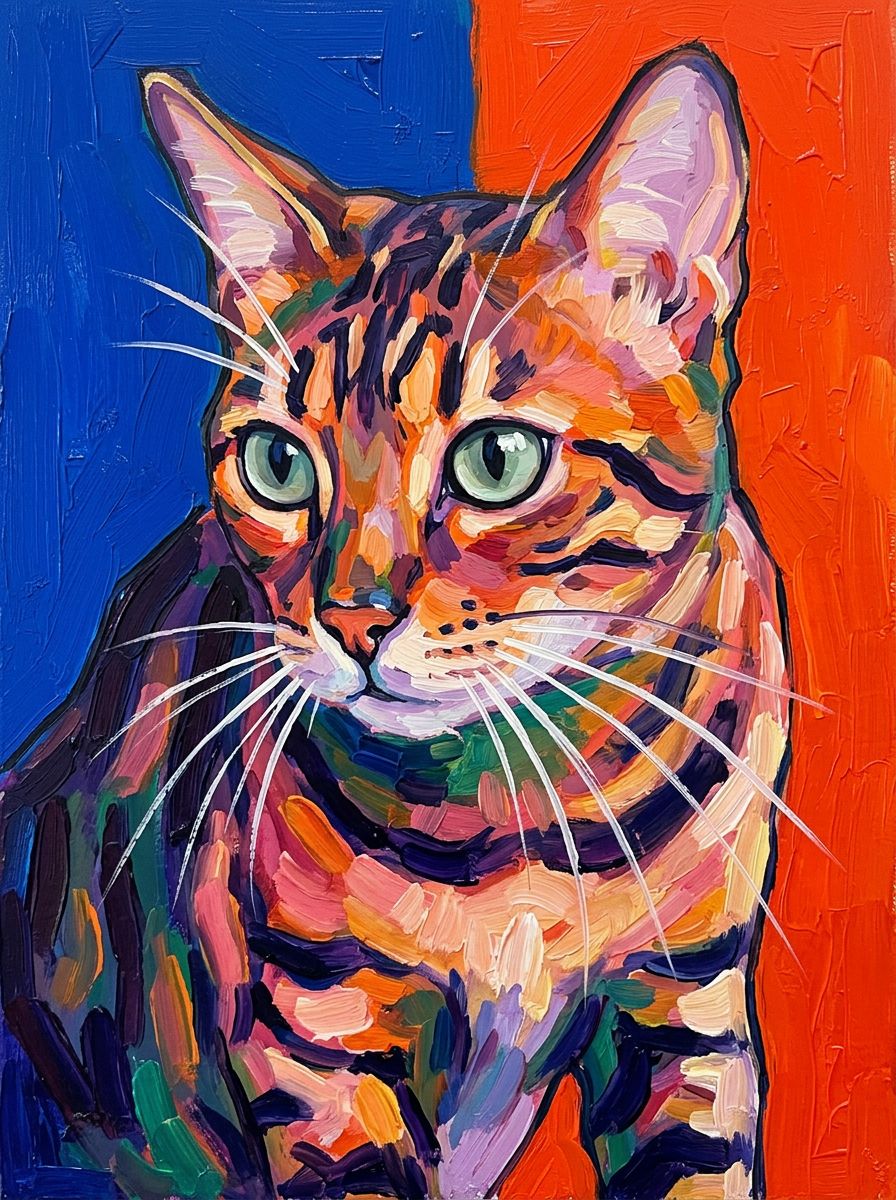
The Bengal looks like a small leopard: a sleek coat covered in spots or marbling, a strong face and alert eyes. That wild pattern is a perfect match for Fauvism, the art of the wild beasts.
How we paint a Bengal
Brown Bengals become warm golds, oranges and pinks, with the dark spots and rosettes kept exactly in place in violet and blue-black. Snow Bengals stay light, in cream and pale lilac with soft darker markings. Silver Bengals turn into cool slate blues and mint.
Bengal coats often have a glitter-like shine, which we paint with bright strokes where the light hits.
Photo tips for a Bengal
Bengals are active and curious. Take the photo when your cat is resting, or attract its attention with a toy just above the camera.
A sharp photo is important for the spots. Use good daylight and hold the phone steady.
Bengal coats shine; avoid a light behind your cat, because it makes the coat glow and hides the spots. Light from the front or the side works best.
About the breed
The Bengal was developed in the United States by crossing domestic cats with the Asian leopard cat. Today Bengals are fully domestic, but they keep the wild look. They are energetic, playful, smart, and many of them like water.
Bengals are very active and intelligent cats that need lots of play, climbing space and puzzle toys. Many learn to fetch, walk on a leash and open doors. They are affectionate and talkative. The glitter on their coat comes from hollow, light-catching hair tips.
Your Bengal, painted wild.
The Fauvi shop opens soon. Enter Pet of the Day for a free digital portrait you can download, or join the list to hear first.